
Print Ready Artwork Checklist: From PDF to Perfect Large Format Printing
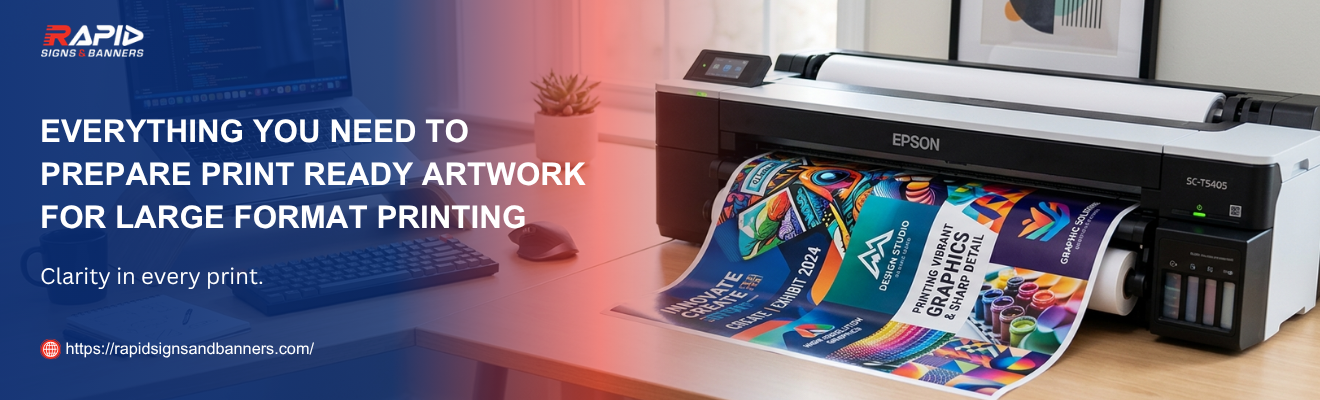
Creating impactful print materials requires more than strong design, it requires precision in preparation. What appears perfect on screen does not always translate seamlessly into print, especially when working with large-scale formats.
This print ready artwork checklist is designed to guide you through the essential steps of file preparation, helping ensure your designs are accurately produced in large format printing without avoidable errors or rework.
1. Use the Correct File Format
Always provide artwork in a high-quality PDF format. This ensures that layouts, fonts, and images remain consistent across different devices and printing systems. A properly prepared file sets the foundation for accurate and reliable large format printing.
2. Understand Vector vs Raster Graphics
A clear understanding of vector vs raster formats is essential for maintaining quality at scale.
- Vector graphics are resolution-independent and can be resized without any loss of clarity, making them ideal for logos, text, and illustrations
- Raster images are resolution-dependent and may lose sharpness when enlarged
Where possible, use vector elements or ensure raster images are created at a sufficiently high resolution.
3. Set the Right DPI for Printing
Image resolution plays a critical role in the final output. The recommended dpi for printing is typically 300 DPI.
- 300 DPI ensures crisp and detailed results
- Lower resolutions may lead to visible pixelation
While viewing distance can influence resolution requirements in large format printing, starting with high-resolution assets is always recommended.
4. Include Bleed and Safe Zone
Properly setting up bleed and safe zone areas helps prevent important content from being trimmed or obstructed.
- Bleed extends the design beyond the trim edge to ensure full coverage
- Safe zone keeps critical elements within a secure margin
This is particularly important for banners and signage, where finishing elements such as trimming or grommets can impact the edges.
5. Verify Colors and Fonts
Ensure your artwork is designed in CMYK color mode to achieve accurate print output. Additionally, embed all fonts or convert them into outlines to avoid inconsistencies during production.
6. Conduct a Final Pre-Print Review
Before submitting your file, carry out a thorough review:
- Check alignment and spacing
- Inspect image clarity at full scale
- Confirm all elements are properly embedded
Following this print ready artwork checklist helps reduce errors, saving both time and production costs.
Conclusion
Consistent print quality is the result of careful planning and attention to detail. When artwork is properly prepared, it not only improves the final output but also streamlines the entire production process.
Using a structured approach like this print ready artwork checklist ensures your files are ready for print from the start, helping you deliver results that are accurate, professional, and aligned with your expectations.
Get in touch with us today to ensure your next print project is delivered with clarity, accuracy, and professional quality.